
Why Do Laundry Detergent Sheets Leave Residue? Causes & Solutions

Simple dosing, better results
Using the right amount of detergent is key to preventing residue. EcoLenity sheets are pre‑measured — one sheet for a standard load, with clear guidance for larger or heavily soiled loads.
If you ever notice that your laundry detergent sheets leave residue on your clothes, a few quick adjustments to your washing routine can easily solve the problem.
Instead, you notice a faint white mark across a dark shirt.
It is easy to blame the detergent sheet—but the sheet itself is rarely the whole story.
Residue can happen when detergent doesn’t dissolve or distribute properly. Water temperature, load size, detergent quantity, washing-machine buildup, and product formulation can all play a role.
Most causes are surprisingly easy to fix.
Why Do Laundry Detergent Sheets Leave Residue?
When detergent doesn’t distribute properly throughout the wash, concentrated traces can remain on fabric after the cycle.
| Causes | What Can Happen | Quick Solution |
|---|---|---|
| Improper Placement | A sheet buried beneath heavy clothing may take longer to dissolve and distribute. | Place the sheet in the drum before adding clothes. |
| Overloading | Tightly packed clothing restricts water movement throughout the load. | Leave enough room for garments to move freely. |
| Very Cold Water | Lower temperatures can affect how quickly some detergent formulations dissolve. | Follow the product’s instructions and use an appropriate wash cycle. |
| Too Much Detergent | Excess detergent can make thorough rinsing more difficult. | Use the recommended amount for your load. |
| Washer Buildup | Detergent, fabric-softener residue, minerals, and dirt can accumulate inside the machine. | Clean and maintain the washer according to the manufacturer’s recommendations. |
How to Prevent Residue on Your Clothes
The best solution isn’t complicated.
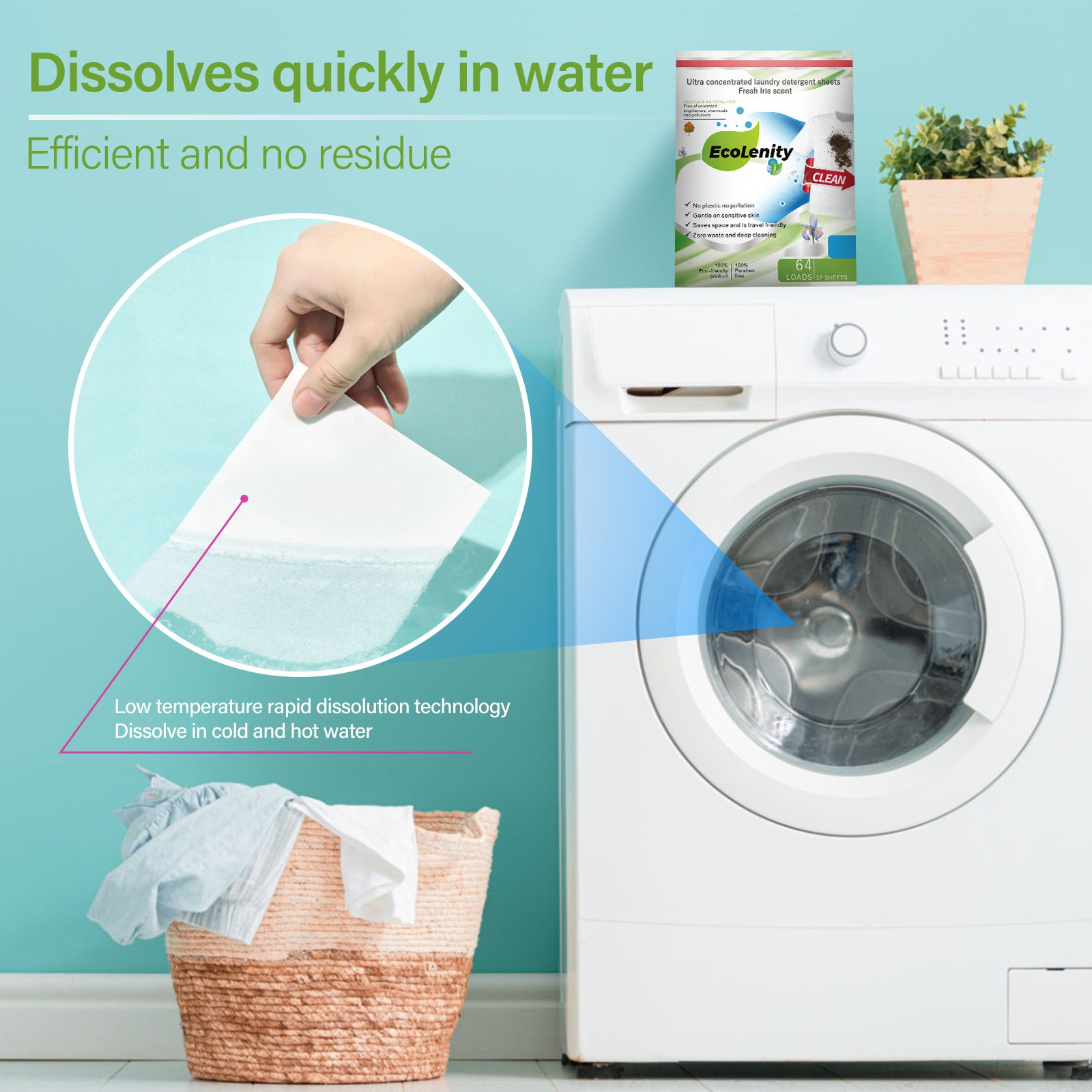
Dissolves fast, cleans thoroughly
Quality detergent sheets are designed to dissolve quickly and distribute evenly. Proper placement and the right wash conditions help ensure a complete dissolve — so nothing is left behind on your clothes.
Place the Sheet in the Drum First
Putting the sheet into the washing machine before adding clothes gives it direct exposure to water as the cycle begins.
Don’t Overload the Machine
Clothes need room to move. A tightly packed drum can prevent water and detergent from circulating evenly, regardless of which detergent format you use.
Use the Right Amount
More detergent does not automatically mean cleaner clothes. Use the amount recommended for the size and soil level of the load.
Consider Your Wash Conditions
Cold-water washing can be effective, but water temperature, cycle selection, and detergent formulation can affect how quickly a product dissolves.
Keep the Washing Machine Clean
Sometimes the residue isn’t coming from the detergent you’re using today. It may be buildup that has accumulated inside the machine over time.
A simple rule for cleaner laundry:
Enough detergent. Enough water. Enough room for clothes to move.
Why Formulation Matters
Not all laundry detergent sheets are created the same.
The sheet needs to break down in water and release its cleaning ingredients throughout the wash. That means formulation matters just as much as the format itself.
A poorly performing sheet can create a disappointing experience.
A well-designed sheet should make the opposite possible: simple dosing, convenient storage, and effective cleaning without the bulk of a traditional detergent bottle.
A Simpler Approach to Laundry
This is part of the thinking behind EcoLenity Laundry Detergent Sheets.
EcoLenity’s concentrated sheets are designed to dissolve during the wash and provide a pre-measured alternative to conventional liquid detergent.
For a standard load, one sheet is typically used. Larger loads, bedding, towels, or more heavily soiled laundry may require additional detergent according to the product guidance.
The format also eliminates the bulky jug and measuring cap that traditionally sit beside the washing machine.
It’s a small change.
But when laundry is already a weekly routine, removing unnecessary steps can make a noticeable difference.
Better laundry doesn’t have to mean more detergent. It can simply mean a better-designed routine.

Better ingredients, better results
EcoLenity sheets are formulated with high-quality, non-toxic ingredients that dissolve effectively and clean thoroughly — so you get great results without the worry of harsh chemicals or stubborn residue.
Understanding why laundry detergent sheets leave residue helps you avoid white streaks and undissolved spots on dark clothes. When you follow proper loading and temperature guidelines, you never have to worry that laundry detergent sheets leave residue again.
So, Why Is There Residue on My Clothes?
If you’re finding white streaks or detergent film after washing, don’t immediately assume the detergent sheet has failed.
Check the basics first:
- Was the washer overloaded?
- Was enough water reaching the detergent?
- Was too much detergent used?
- Is the machine itself clean?
- Is the product properly formulated for your washing conditions?
Often, the answer is somewhere in that list.
The goal isn’t to use more detergent.
It’s to make sure the detergent you’re using can actually do its job.
Frequently Asked Questions
Why are my laundry detergent sheets leaving residue?
Residue can result from incomplete dissolving or poor distribution. Overloading the washer, using too much detergent, cold washing conditions, and buildup inside the machine can also contribute. Learn more about how detergent sheets work →
Do laundry detergent sheets dissolve in cold water?
Quality detergent sheets are designed to dissolve during washing, including cold-water cycles. However, water temperature and the specific formulation can affect how quickly they dissolve and distribute. Compare sheets vs. liquid detergent →
Can using too much detergent cause residue?
Yes. Using more detergent than necessary can make rinsing more difficult and may contribute to residue or buildup on fabrics. Read why the laundry detergent cap trap is costing you more →
How do I remove detergent residue from clothes?
Run the affected clothing through another rinse or wash cycle without adding more detergent. For persistent residue, follow the garment-care instructions and consider whether buildup inside the washing machine may be contributing to the problem. Discover why your clothes still smell after washing →
Experience the EcoLenity Difference
Gentle on fabrics. Kind to the planet. Discover why families trust EcoLenity for premium, sustainable laundry care.
Shop EcoLenity TodayPremium Resources
Curated guides to help you go deeper — from building a sustainable home to mastering your laundry routine.